Sonographer in the Making
Liver Flashcards
Three ways to structure the Liver, Normal Anatomy set. Same content in each, taken from your original cards. Pick the one that fits how you study, or use them together.
One idea per card
Atomic units
Every fact becomes its own card. The front asks one thing; the back gives the short answer plus the original wording and any memory trick.
Grouped by topic
Concept clusters
One card per topic. The front lists what to recall from memory; the back checks each item one at a time.
Map + Pins
Overview plus atomic cards
The atomic cards from A (the pins) plus map cards that show how everything is organized, without giving answers. Preview, drill, then quiz with the map.
One testable idea per card. Front = the retrieval prompt; back = a minimal answer, the verbatim original text, any memory trick, and a figure slot. A small chip marks the card type (Q&A, list, cloze, image ID, compare). {{ countA }} content cards + set cover + section divider + a 10-item self-test derived from the same units.
IN THE MAKING
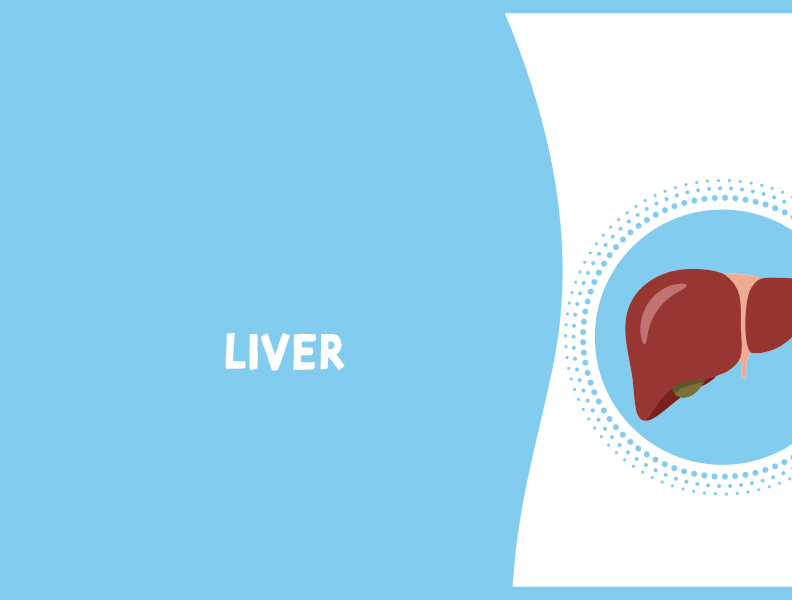
drop labeled image here
One card per topic. Front = a short cue list (the recall scaffold, one line per thing to produce from memory); back = the member ideas as prompt → answer for item-by-item self-check. Same content as 1a, just grouped — {{ countB }} cluster cards + cover + divider. Denser backs (e.g. Anatomy) are flagged where they push past one card.
IN THE MAKING
A split deck. Pins are the atomic cards from 1a, unchanged — they hold every answer. Maps are a few navy wayfinding cards that show how the pins are organized: category names, pin counts, and cue keywords, but never an answer. Read a map to preview the territory, drill the pins, then use the map in reverse as a free-recall test. Liver / Normal derives 2 maps over 36 pins.